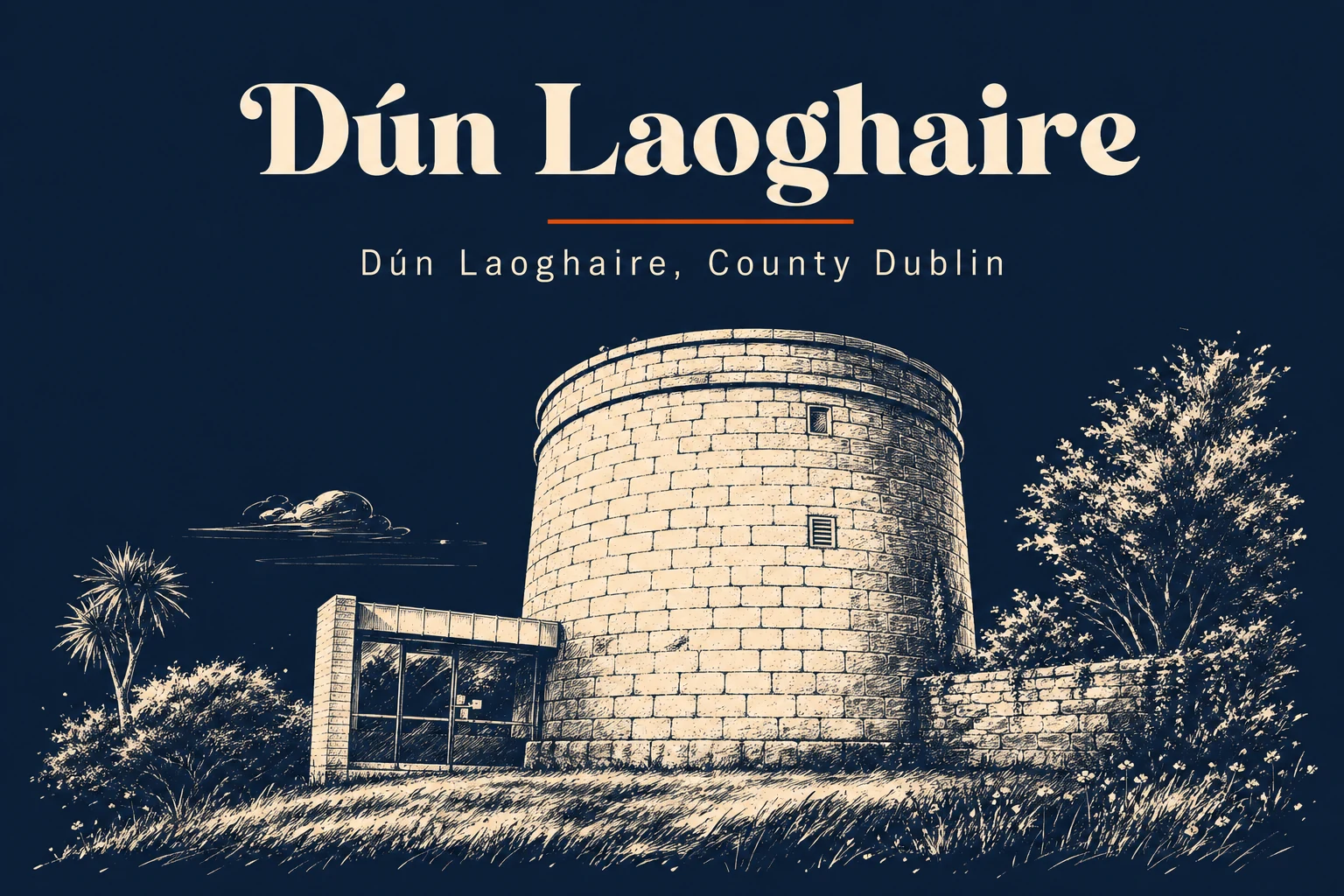
Dún Laoghaire · Co. Dublin
Two granite piers, a Sunday market, and a DART. The east pier walk is what Dubliners do when they need air.
Dún Laoghaire is a harbour town, and everything radiates from the harbour. The twin granite piers - East and West - were built between 1817 and 1842 by engineer John Rennie, using stone quarried specifically for the project in nearby Dalkey and hauled up by tramway. The East Pier walk is a Dublin Sunday tradition in a way that has nothing to do with tourism: people bring dogs, children, elderly relatives, and thermoses of tea. The lighthouse at the end is the turning point. You walk back into the wind and feel like you've earned something.
The town itself has a full-scale dining scene, a remarkable new library on the waterfront - the Lexicon, opened 2014, five storeys, almost as many visitors per year as the National Library - and the National Maritime Museum in the old Mariners' Church on Haigh Terrace. Two kilometres north, at Sandycove, the Martello tower where James Joyce spent six days in 1904 is now a free museum. The first chapter of Ulysses is set on its roof. Joyce left after a revolver incident at midnight; the tower stayed.
A note on the ferry: Dún Laoghaire had a high-speed Stena Line service to Holyhead that was the romantic way to cross to Wales. It was discontinued. Ferries to Holyhead now leave from Dublin Port. The harbour is still working - yachts, the lifeboat, the occasional cargo - but the big ferry is gone. Plan accordingly if you need to cross.